Launch index
Launch Successful

Soyuz 2.1a/Fregat-M | Meridian-M No.18

July 30, 2019 at 5:57 AM UTC

Plesetsk Cosmodrome, Russian Federation

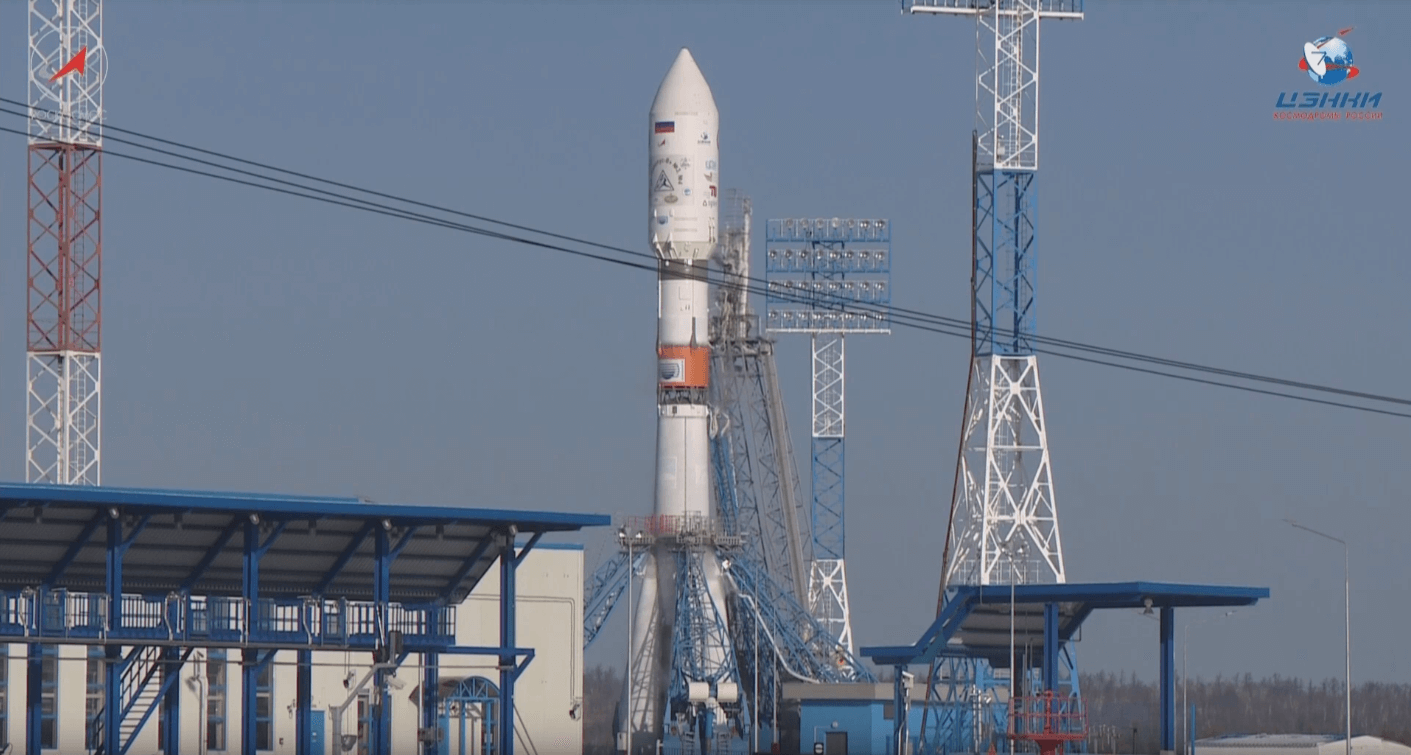
Soyuz 2.1a/Fregat-M | Meridian-M No.18 launch image
Mission imagery · Soyuz 2.1a Fregat-M

Launch details

LAUNCH IN

T−00d00h00m00s

July 30, 2019 at 5:57 AM UTC

Status: Launch Successful · Live feed refreshes every 30 seconds

43/4 (43R)

Plesetsk Cosmodrome, Russian Federation · 62.9288, 40.4571

Open map
Launch site
43/4 (43R)

Plesetsk Cosmodrome, Russian Federation

Launch probability
Not published
Window opens
July 30, 2019 at 5:00 AM UTC
Window closes
July 30, 2019 at 8:00 AM UTC
Feed updated
June 13, 2024 at 5:21 PM UTC

Mission description

The Meridian series of communications satellites is reported to be the replacement for all the Molniya-1T, the Molniya-3 and Molniya-3K satellite series and possibly also for the communication component of the Parus. They are launched into highly eccentric Molniya-orbits. Meridian is the highly eccentric orbit (HEO) component of the Integrated Satellite Communications System (ISSS), where they work in conjunction with the geostationary Raduga-1M (Globus-M) satellites. The bus structure is reportedly pressurized, possibly based on the Uragan-M bus. Meridian satellites carry three transponders operating in different frequency bands.

Mission media

Watch the launch.

Пуск ракеты-носителя «Союз-2» с космодрома Плесецк Воздушно-космическими силами России

Full video record
Vehicle

Soyuz 2.1a Fregat-M

Soyuz · Fregat-M

Height

46.3 m

Diameter

2.95 m

LEO capacity

7,020 kg

Successful launches

19

Launch complex

43/4 (43R)

Plesetsk Cosmodrome, Russian Federation

Plesetsk Cosmodrome is a Russian spaceport located in Mirny, Arkhangelsk Oblast, about 800 km north of Moscow and approximately 200 km south of Arkhangelsk. Originally developed as an ICBM site for the R-7 missile, it also served for numerous satellite launches using the R-7 and other rockets. Its high latitude makes it useful only for certain types of launches, especially the Molniya orbits, so for much of the site's history it functioned as a secondary location, with most orbital launches taking place from Baikonur, in the Kazakh SSR. With the end of the Soviet Union, Baikonur became a foreign territory, and Kazakhstan charged $115 million usage fees annually. Consequently, Plesetsk has seen considerably more activity since the 2000s.

Open map