Launch index
Launch Successful

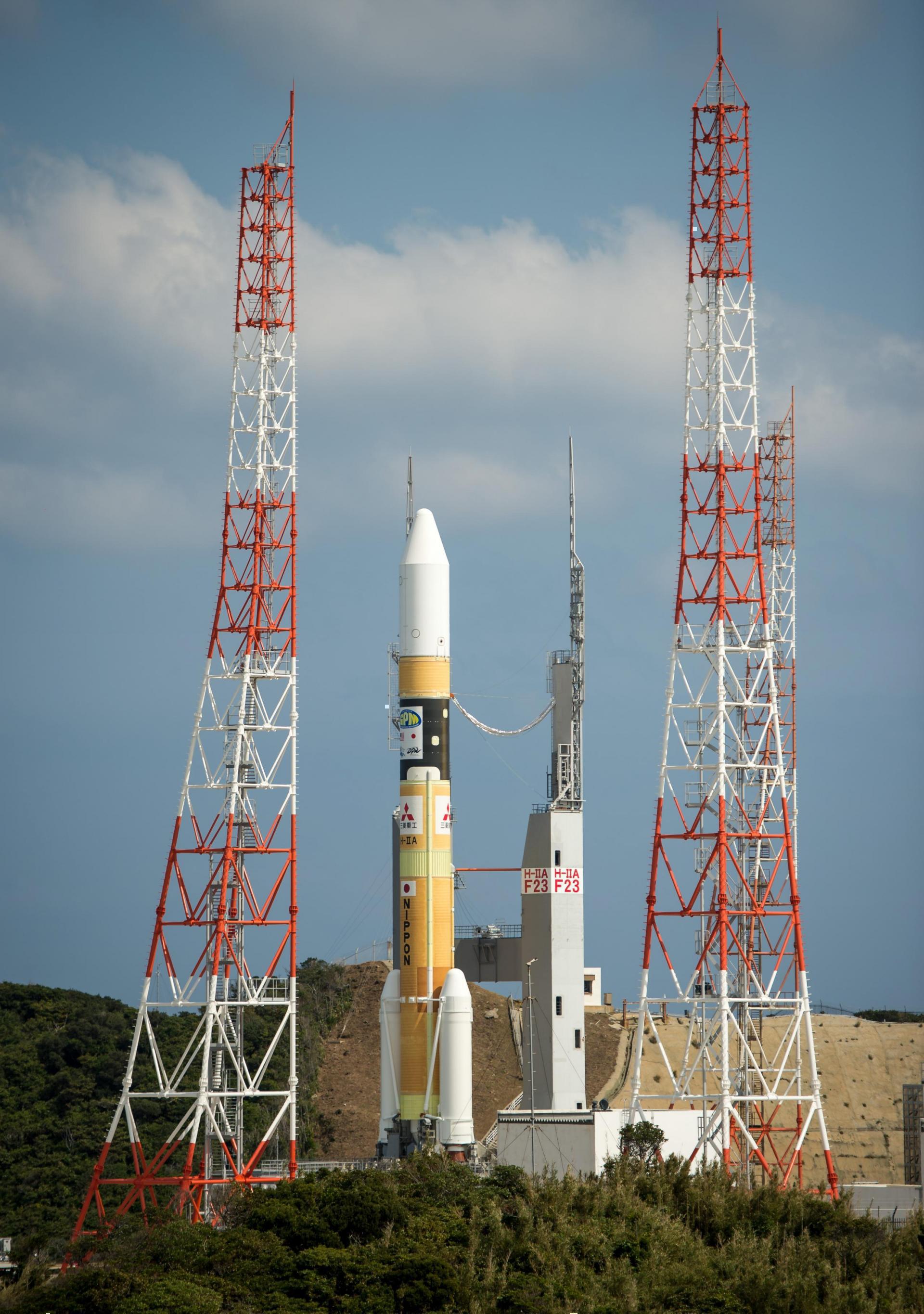
H-IIA 202 | Himawari-9

November 2, 2016 at 6:20 AM UTC

Tanegashima Space Center, Japan

H-IIA 202 | Himawari-9 launch image
Mission imagery · H-IIA 202

Launch details

LAUNCH IN

T−00d00h00m00s

November 2, 2016 at 6:20 AM UTC

Status: Launch Successful · Live feed refreshes every 30 seconds

Yoshinobu Launch Complex LP-1

Tanegashima Space Center, Japan · 30.4008, 130.9778

Open map
Rocket
H-IIA 202
Launch site
Yoshinobu Launch Complex LP-1

Tanegashima Space Center, Japan

Launch probability
-1%
Window opens
November 2, 2016 at 6:20 AM UTC
Window closes
November 2, 2016 at 9:18 AM UTC
Feed updated
June 14, 2023 at 3:53 AM UTC

Mission description

Himawari-9 is a geostationary weather satellite operated by the Japan Meteorological Agency. It will be placed at 140 degrees East and will replace Himawari-8 in 2022. The satellite is about 3,500 kilograms and has a design life of around 15 years with operational life lasting 8 years.The main instrument aboard is a 16 channel multispectral imager to capture visible light and infrared images of the Asian-Pacific region.

Mission media

Watch the launch.

静止気象衛星「ひまわり9号」/H-IIAロケット31号機 打ち上げライブ中継 |The live broadcast of the Himawari-9/H-IIA F31 launch

Full video record
Vehicle

H-IIA 202

H-II · 202

Height

53 m

Diameter

4 m

LEO capacity

10,000 kg

Successful launches

35

Launch complex

Yoshinobu Launch Complex LP-1

Tanegashima Space Center, Japan

The Tanegashima Space Center is the largest rocket-launch complex in Japan. It is located on the southeastern tip of Tanegashima, an island located south of Kyushu, an island and region and Japan. It was established in 1969 when the National Space Development Agency of Japan (NASDA) was formed, and is now run by JAXA. The activities that take place at TNSC include assembly, testing, launching, and tracking satellites, as well as rocket engine firing tests.

Open map