Spacecraft catalog
Beyond the launch vehicle.
577 capsules, orbiters, cargo vehicles, stations, and spacecraft from across the program.
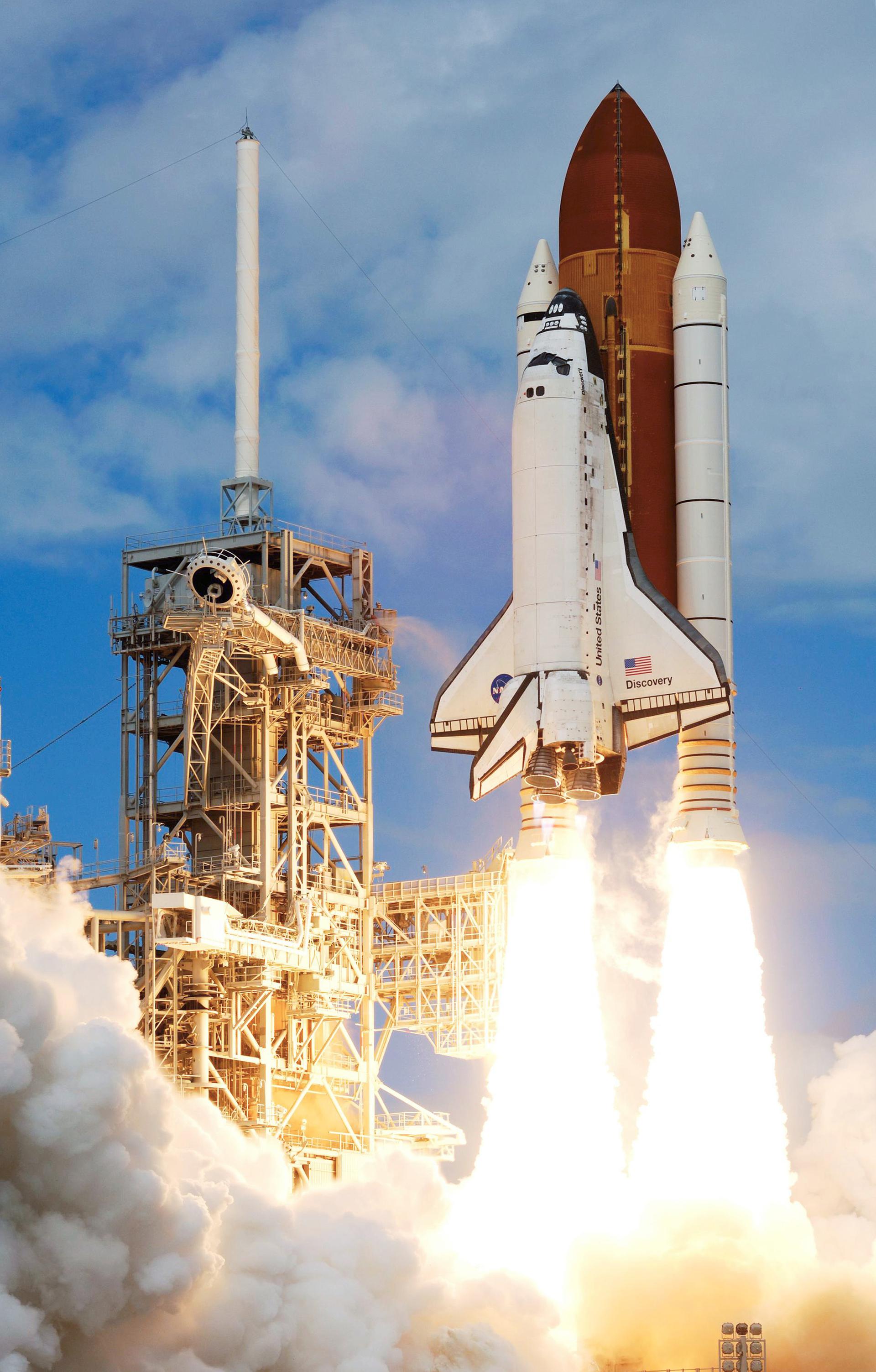
Space Shuttle Challenger
National Aeronautics and Space Administration
Space Shuttle Challenger (Orbiter Vehicle Designation: OV-099) was the second orbiter of NASA's space shuttle program to be put into service, after Columbia. Challenger was built by Rockwell International's Space Transportation Systems Division, in Downey, California. Its maiden flight, STS-6, began on April 4, 1983. The orbiter was launched and landed nine times before breaking apart 73 seconds into its tenth mission, STS-51-L, on January 28, 1986, resulting in the death of all seven crew members, including a civilian school teacher. It was the first of two shuttles to be destroyed in flight, the other being Columbia, in 2003. The accident led to a two-and-a-half-year grounding of the shuttle fleet; flights resumed in 1988, with STS-26 flown by Discovery. Challenger was replaced by Endeavour, which was built from structural spares ordered by NASA in the construction contracts for Discovery and Atlantis.
Space Shuttle Columbia
National Aeronautics and Space Administration
Space Shuttle Columbia (Orbiter Vehicle Designation: OV-102) was the first space-rated orbiter in NASA's Space Shuttle fleet. It launched for the first time on mission STS-1 on April 12, 1981, the first flight of the Space Shuttle program. Over 22 years of service, it completed 27 missions before disintegrating during re-entry near the end of its 28th mission, STS-107 on February 1, 2003, resulting in the deaths of all seven crew members.
Space Shuttle Discovery
National Aeronautics and Space Administration
Space Shuttle Discovery (Orbiter Vehicle Designation: OV-103) is one of the orbiters from NASA's Space Shuttle program and the third of five fully operational orbiters to be built. Its first mission, STS-41-D, flew from August 30 to September 5, 1984. Over 27 years of service it launched and landed 39 times, gathering more spaceflights than any other spacecraft to date. Discovery became the third operational orbiter to enter service, preceded by Columbia and Challenger. It embarked on its last mission, STS-133, on February 24, 2011 and touched down for the final time at Kennedy Space Center on March 9, having spent a cumulative total of almost a full year in space. Discovery performed both research and International Space Station (ISS) assembly missions. It also carried the Hubble Space Telescope into orbit. Discovery was the first operational shuttle to be retired, followed by Endeavour and then Atlantis.
Space Shuttle Endeavour
National Aeronautics and Space Administration
Space Shuttle Endeavour (Orbiter Vehicle Designation: OV-105) is a retired orbiter from NASA's Space Shuttle program and the fifth and final operational shuttle built. It embarked on its first mission, STS-49, in May 1992 and its 25th and final mission, STS-134, in May 2011. STS-134 was expected to be the final mission of the Space Shuttle program, but with the authorization of STS-135, Atlantis became the last shuttle to fly. The United States Congress approved the construction of Endeavour in 1987 to replace Challenger, which was lost in 1986. Structural spares built during the construction of Discovery and Atlantis were used in its assembly. NASA chose, on cost grounds, to build Endeavour from spares rather than refitting Enterprise.

Voskhod-3KD No.1
Russian Federal Space Agency (ROSCOSMOS)
Voskhod spacecraft launched on February 22, 1965.
Voskhod-3KD No.4
Russian Federal Space Agency (ROSCOSMOS)
Voskhod 2 was a Voskhod spacecraft which launched on 18 March 1965 07:00 UTC. It was the second manned flight of the Voskhod program. It launched two cosmonauts for craft testing and science purposes. The crew was Pavel Belyayev and Alexey Leonov.
Voskhod-3KV No.2
Russian Federal Space Agency (ROSCOSMOS)
Voskhod spacecraft launched on October 6, 1964.
Voskhod-3KV No.3
Russian Federal Space Agency (ROSCOSMOS)
Voskhod 1 was a Voskhod spacecraft which launched on 12 October 1964 07:30 UTC. It was the seventh manned flight of the Soviet spaceflight program. It launched three cosmonauts for craft testing and science purposes. The crew was Vladimir Komarov, Konstantin Feoktistov, and Boris Yegorov.
Voskhod-3KV No.5
Russian Federal Space Agency (ROSCOSMOS)
Voskhod spacecraft which launched on February 22, 1966.
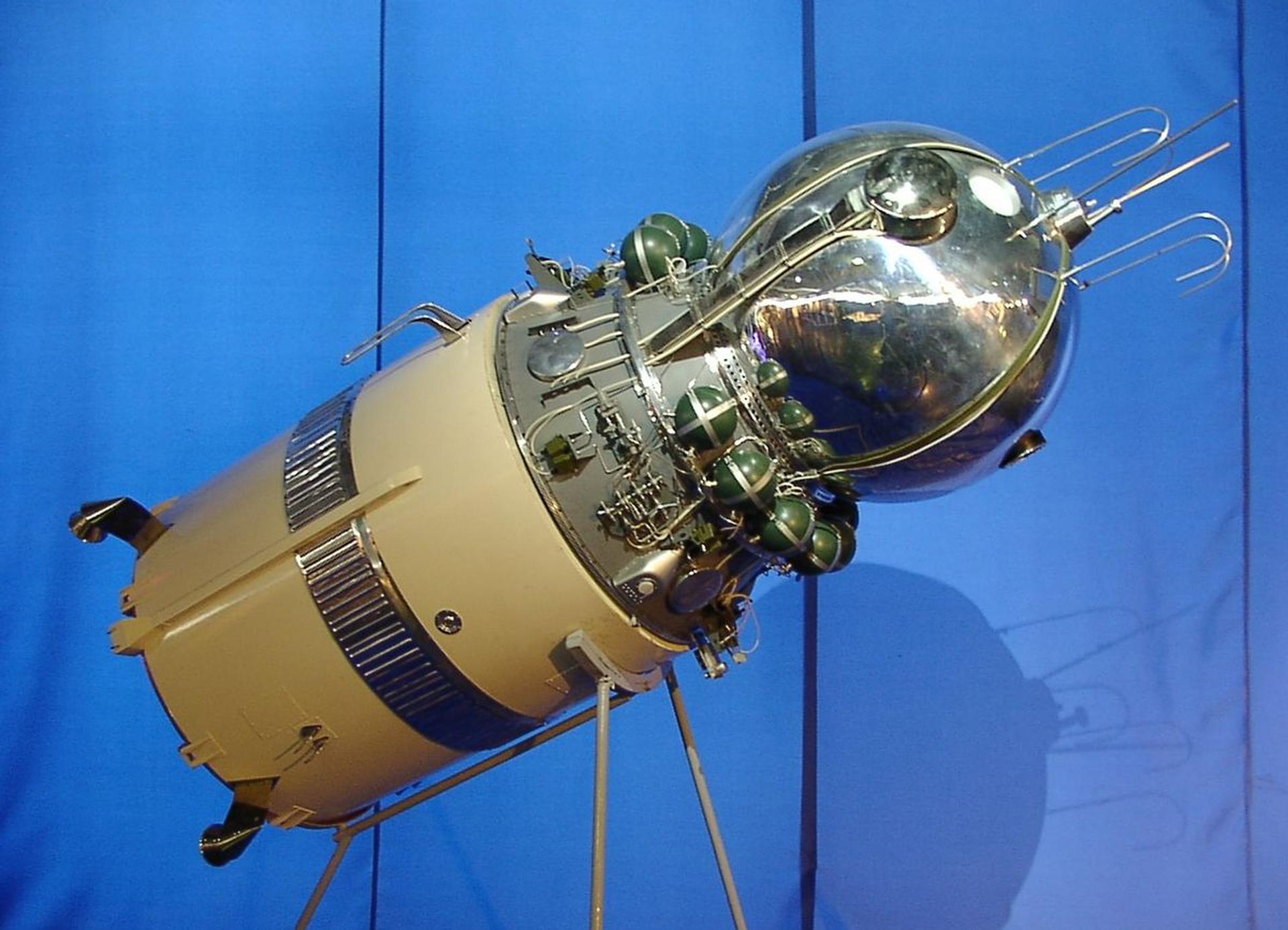
Vostok-1K No.1
Russian Federal Space Agency (ROSCOSMOS)
Vostok spacecraft used for test flights before the first human spaceflight.
Vostok-1K No.2
Russian Federal Space Agency (ROSCOSMOS)
Vostok spacecraft used for test flights before the first human spaceflight.
Vostok-1K No.3
Russian Federal Space Agency (ROSCOSMOS)
Vostok spacecraft used for test flights before the first human spaceflight.
Vostok-1K No.4
Russian Federal Space Agency (ROSCOSMOS)
Vostok spacecraft used for test flights before the first human spaceflight.
Vostok-1P
Russian Federal Space Agency (ROSCOSMOS)
First Vostok spacecraft. The 1P variant was not designed to be recovered from orbit.
Vostok-3KA No.1
Russian Federal Space Agency (ROSCOSMOS)
Uncrewed Vostok spacecraft launched on March 9, 1961.
Vostok-3KA No.2
Russian Federal Space Agency (ROSCOSMOS)
Uncrewed Vostok spacecraft launched on March 25, 1961.
Vostok-3KA No.3
Russian Federal Space Agency (ROSCOSMOS)
Vostok 1 was a Vostok spacecraft which launched on 12 April 1961 06:07 UTC. It transported one cosmonaut to Low Earth Orbit. The crew was Yuri Gagarin.
Vostok-3KA No.4
Russian Federal Space Agency (ROSCOSMOS)
Vostok 2 was a Vostok spacecraft which launched on 6 August 1961 06:00 UTC. It transported one cosmonaut to Low Earth Orbit. The crew was Gherman Titov.
Vostok-3KA No.5
Russian Federal Space Agency (ROSCOSMOS)
Vostok 3 was a Vostok spacecraft which launched on 11 August 1962 08:24 UTC. It transported one cosmonaut to Low Earth Orbit. The crew was Andriyan Nikolayev.
Vostok-3KA No.6
Russian Federal Space Agency (ROSCOSMOS)
Vostok 4 was a Vostok spacecraft which launched on 12 August 1962 08:02:33 UTC. It transported one cosmonaut to Low Earth Orbit. The crew was Pavel Popovich.
Vostok-3KA No.7
Russian Federal Space Agency (ROSCOSMOS)
Vostok 5 was a Vostok spacecraft which launched on 14 June 1963 11:58:58 UTC. It transported one cosmonaut to Low Earth Orbit. The crew was Valery Bykovsky.
Vostok-3KA No.8
Russian Federal Space Agency (ROSCOSMOS)
Vostok 6 was a Vostok spacecraft which launched on 16 June 1963 09:29:52 UTC. It transported one cosmonaut to Low Earth Orbit. The crew was Valentina Tereshkova.

X-15-1
National Aeronautics and Space Administration
First X-15 experimental rocket plane.
X-15-2
National Aeronautics and Space Administration
Second X-15 experimental rocket plane.
Take the app with you
Download SpaceLaunches on the App Store.
Follow launches, missions, and the space program from your iPhone.


Scan With an iPhone or iPad to Open the App Store.