Launch index
Launch Successful

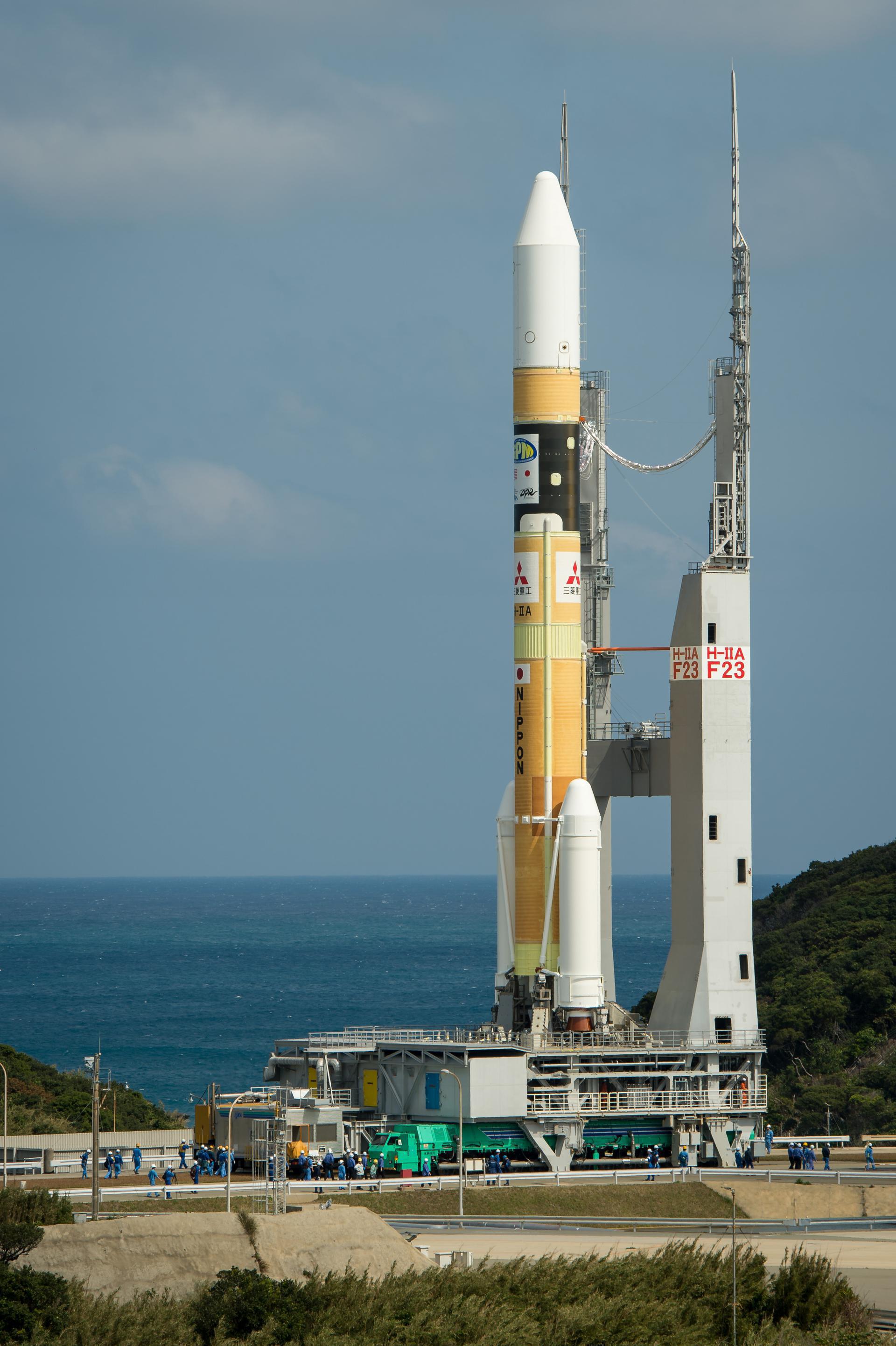
H-IIA 204 | Kiku-8

December 18, 2006 at 6:32 AM UTC

Tanegashima Space Center, Japan

H-IIA 204 | Kiku-8 launch image
Mission imagery · H-IIA 204

Launch details

LAUNCH IN

T−00d00h00m00s

December 18, 2006 at 6:32 AM UTC

Status: Launch Successful · Live feed refreshes every 30 seconds

Yoshinobu Launch Complex LP-1

Tanegashima Space Center, Japan · 30.4008, 130.9778

Open map
Rocket
H-IIA 204
Launch site
Yoshinobu Launch Complex LP-1

Tanegashima Space Center, Japan

Launch probability
Not published
Window opens
December 18, 2006 at 6:32 AM UTC
Window closes
December 18, 2006 at 6:32 AM UTC
Feed updated
March 25, 2024 at 12:37 PM UTC

Mission description

ETS-VIII (Engineering Test Satellite) is to be launched in 2006, with the main purpose of dealing with the increasing demand for digital communications, such as mobile phones and other mobile devices. The satellite, with a gross weight of around three tons and a diameter of 40 meters, has two Large Deployable Antenna Reflectors (LDAR) and two Solar Array paddles. One LDAR, about the size of a tennis court, is one of the world's largest geostationary satellites. Its size will enable direct communications with a geostationary satellite that covers all of Japan, making mobile communications more reliable. Currently under development are Large Deployable Antenna Reflectors with metal-mesh, high-power transponders, and on-board processors. The technologies used in the development of these LDARs will be applicable to other large space structures. A subscale test of the LDARs was flown as the LDREX experiment.

Vehicle

H-IIA 204

H-II · A 204

Height

53 m

Diameter

4 m

LEO capacity

0 kg

Successful launches

5

Launch complex

Yoshinobu Launch Complex LP-1

Tanegashima Space Center, Japan

The Tanegashima Space Center is the largest rocket-launch complex in Japan. It is located on the southeastern tip of Tanegashima, an island located south of Kyushu, an island and region and Japan. It was established in 1969 when the National Space Development Agency of Japan (NASDA) was formed, and is now run by JAXA. The activities that take place at TNSC include assembly, testing, launching, and tracking satellites, as well as rocket engine firing tests.

Open map