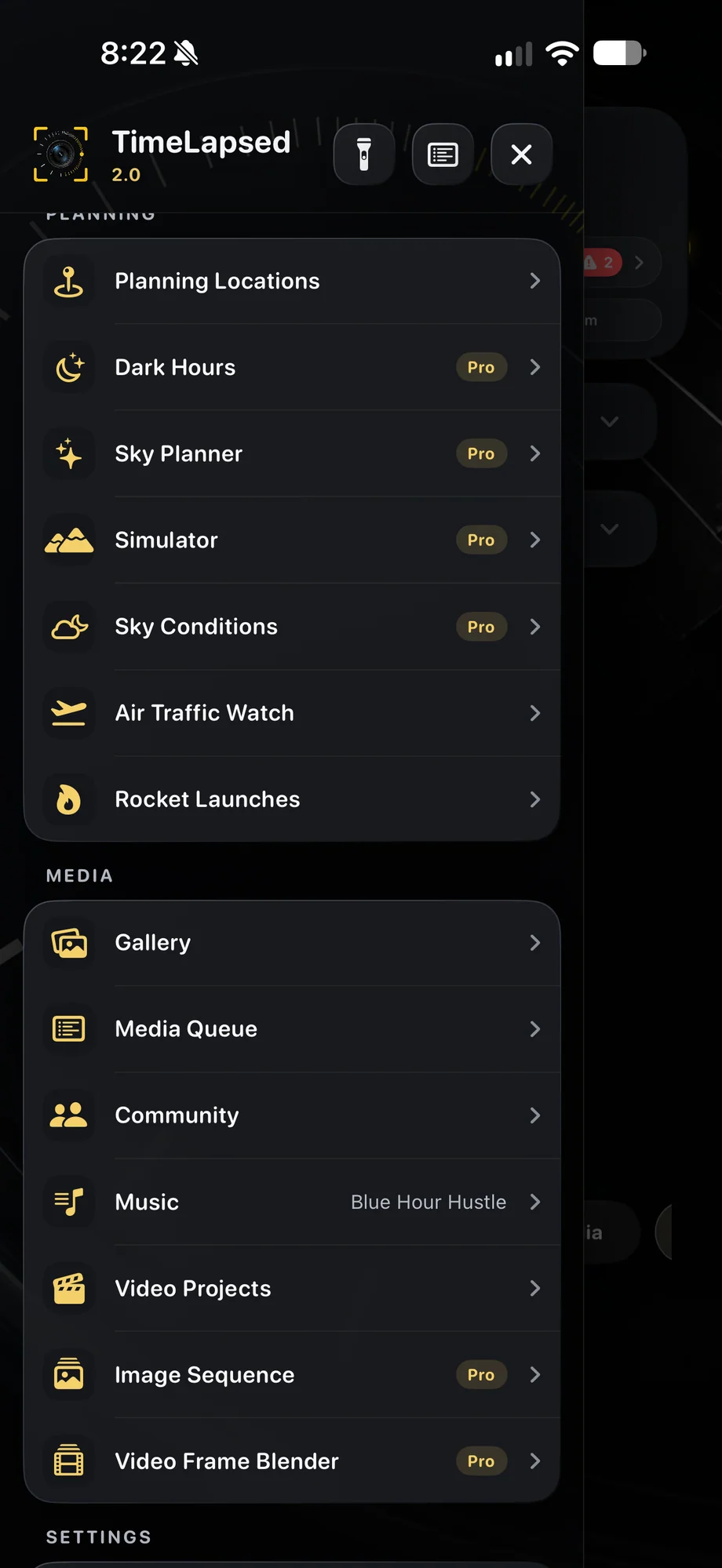
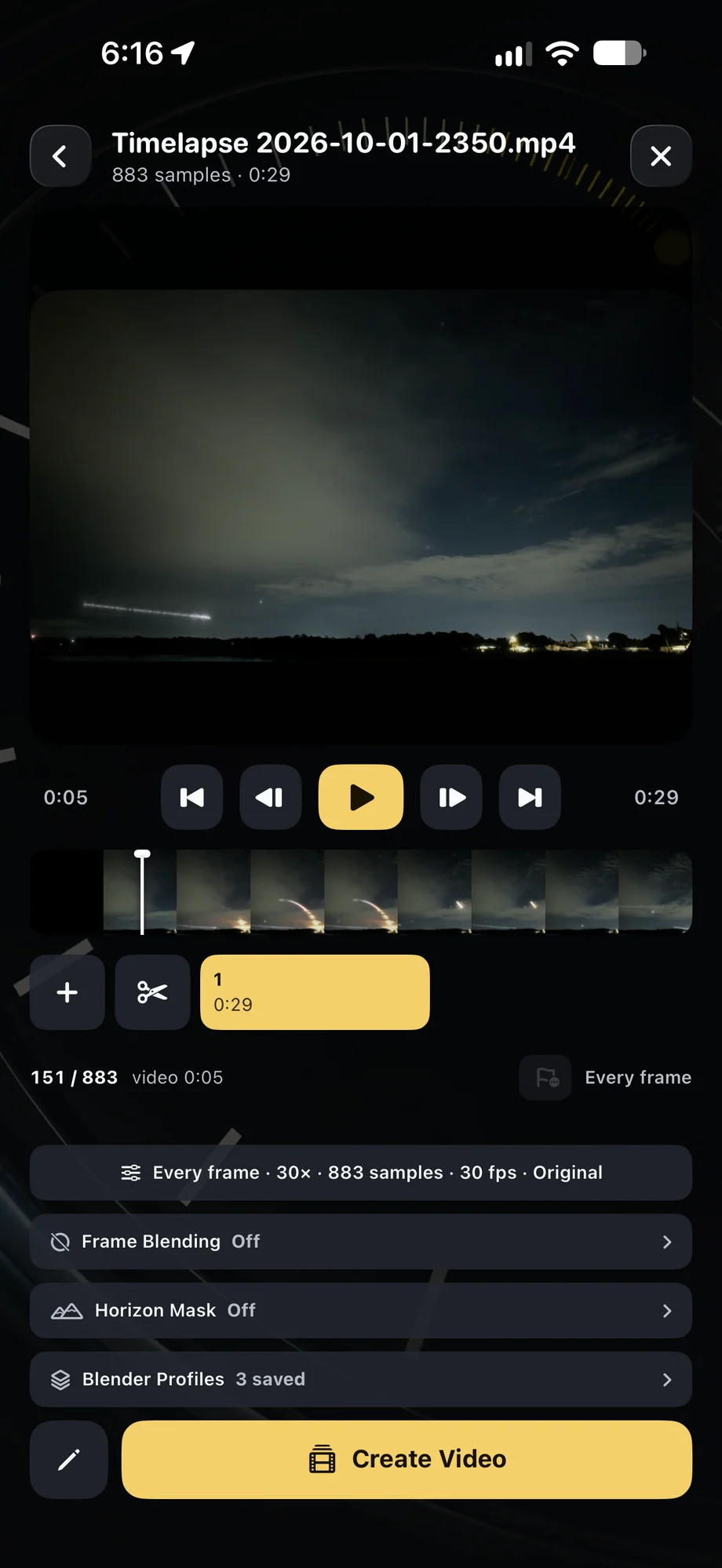
01 · Image Sequence Import
Prepare a sequence that belongs together.
Use stills from the same capture session and check their order before importing. A consistent frame size and composition make the transition between images easier to judge. If the source came from another camera, move the files into a location Photos or Files can access. A supported card reader or external drive can be part of that transfer.
Prepare a sequence that belongs together.
02 · Image Sequence Import
Turn separate pictures into visible motion.
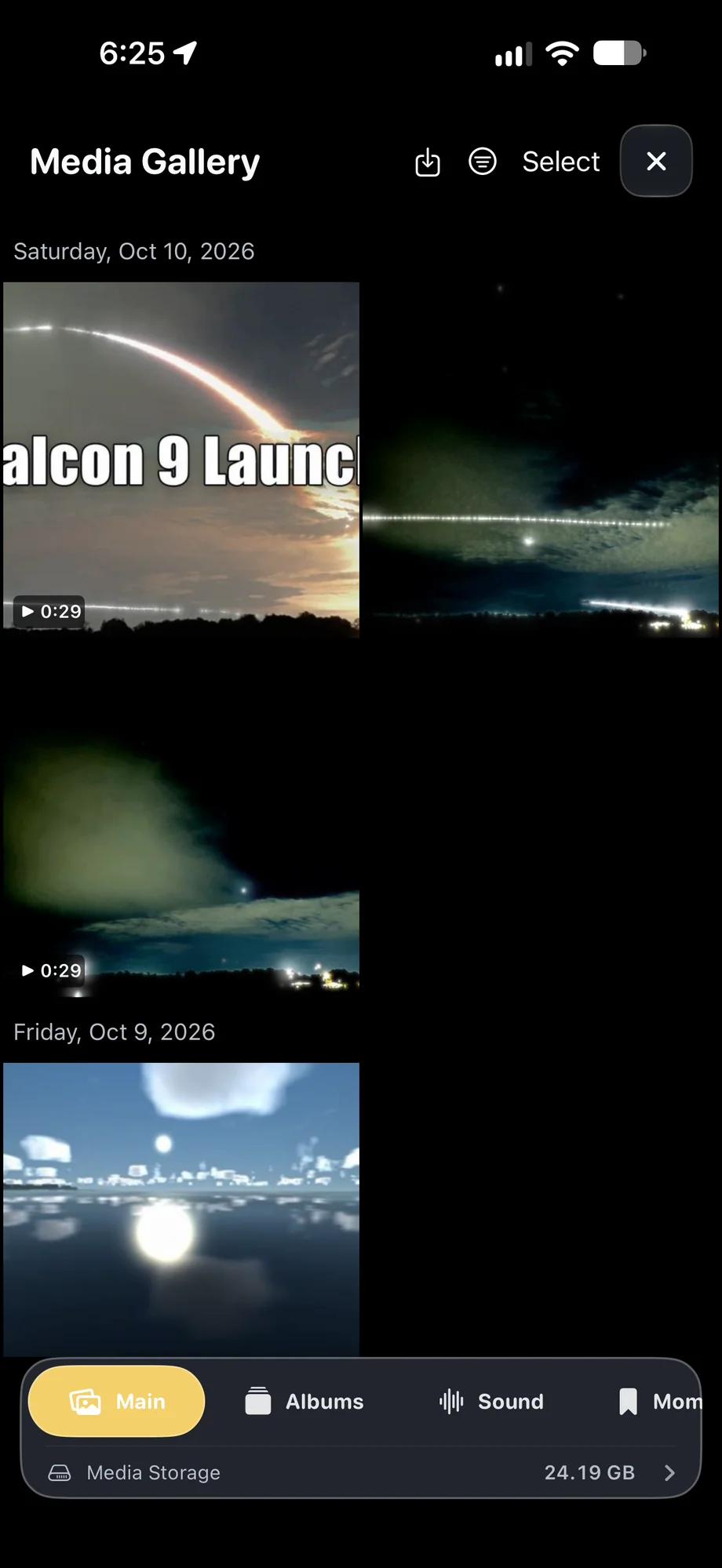
Import the sequence and review how the frames play together. The interval used by the original camera determines what movement was captured; playback choices determine how quickly you see it. A changing sky, a growing drawing or a long exposure series can each need a different pace. Watch the result before putting it into a larger project.
Turn separate pictures into visible motion.
03 · Image Sequence Import
Finish the sequence as part of a story.
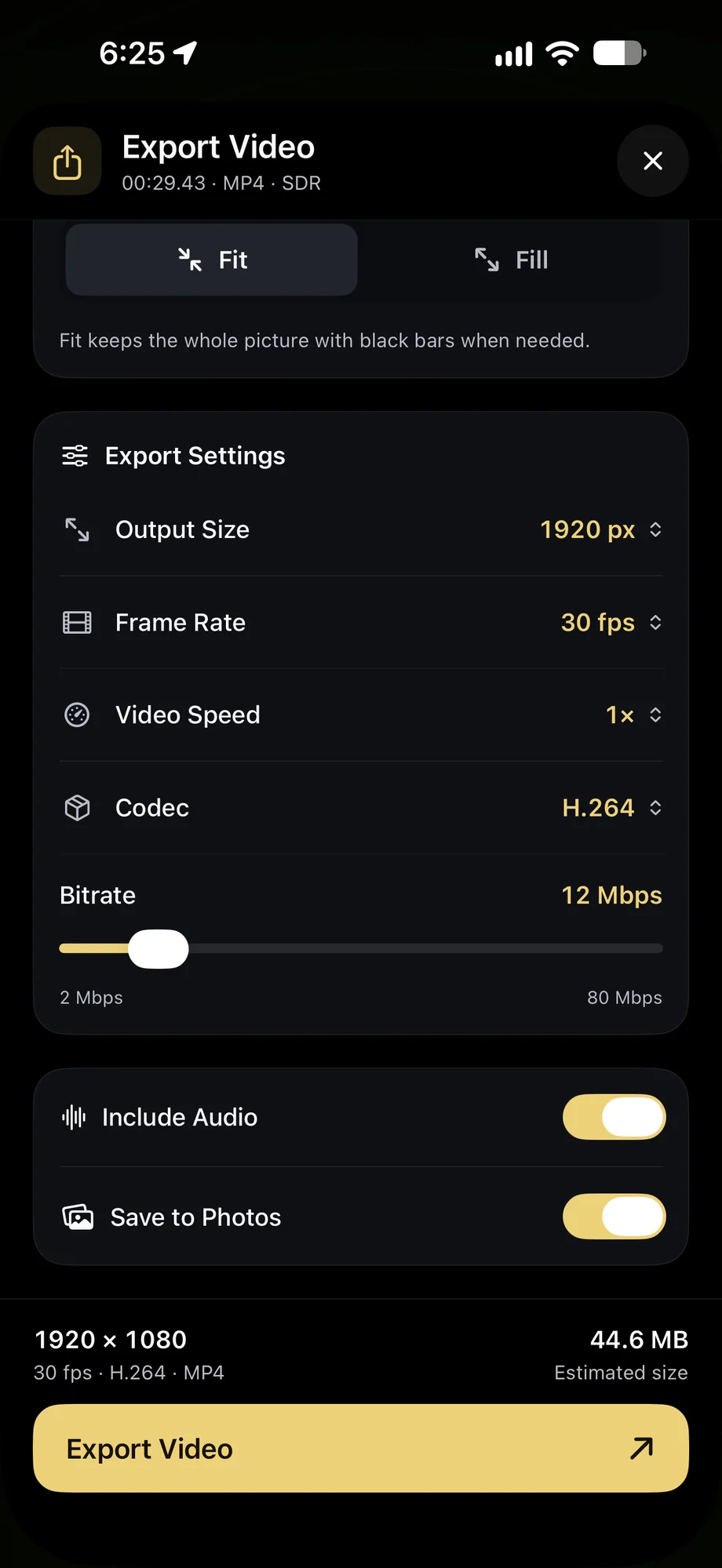
Use the rebuilt video editor to combine the timelapse with other clips, change framing, adjust color and add titles or audio. Choose portrait or widescreen for the destination where it will be watched. Keep the source stills until you are satisfied with the output so you can revisit a frame or make a different version later.
Finish the sequence as part of a story.
A Practical Workflow
- 01
Gather the stills
Move a related, ordered sequence into Photos or Files.
- 02
Import and review
Bring the sequence into TimeLapsed and check the motion and pace.
- 03
Build the film
Edit the result with clips, titles, color and a soundtrack.
Inside the App
Tap a Screen for a Closer Look
Questions About Image Sequence Import
Do the stills have to come from an iPhone?
No. TimeLapsed can import still-image sequences captured with other cameras through Photos or Files.
Can I connect a memory card?
A compatible reader can expose files to the device. Access depends on your iPhone or iPad, the reader and the storage format it supports.